‘Median Planning Decision Time’ — The Overlooked Variable in ROI Modelling
Time is rarely factored into early-stage residential feasibility discussions or return on investment calculations; Yet planning decision time directly affects capital efficiency. Consider two identical extension projects.
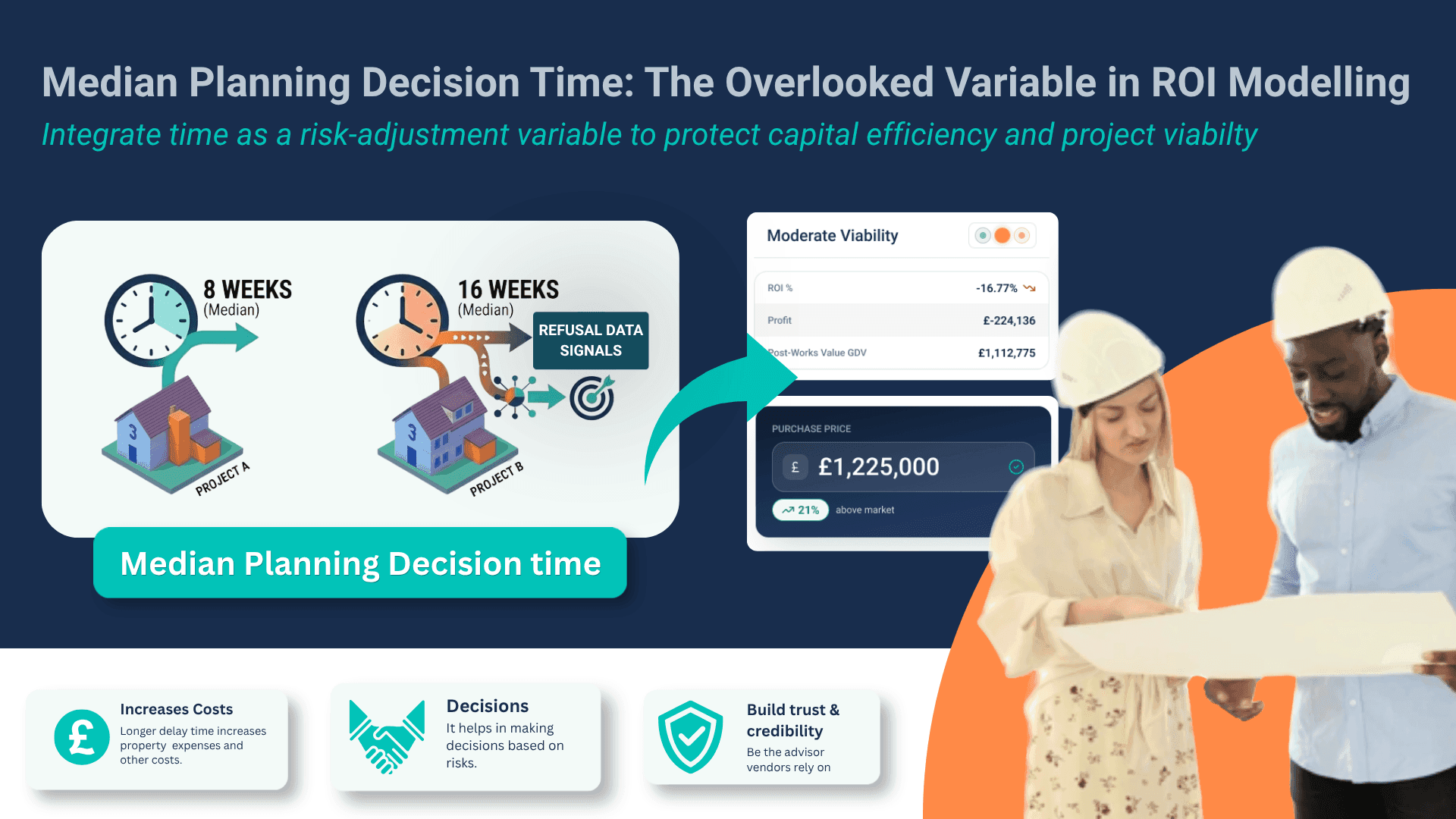
Project A > Median planning decision time: 8 weeks.
Project B > Median planning decision time: 16 weeks.
The difference materially impacts:
- Holding costs
- Financing costs
- Opportunity cost of capital
- Exposure to market volatility
In rising markets, delays may dilute uplift; In softening markets, they may erode margin entirely, and planning decision time should therefore be integrated into feasibility frameworks as a risk-adjustment variable. Areas with predictable, shorter decision cycles support tighter project timelines and more confident ROI modelling.
Conversely, extended median decision periods may justify:
- Higher contingency allocation
- Conservative GDV assumptions
- More cautious uplift classification
Planning is not merely a binary approval process; It is a time-based risk variable. By incorporating decision velocity into structured modelling, residential feasibility analysis becomes more aligned with real-world capital deployment. Software applications like Property Stalker incorporate this to generate a professional report that helps investors, estate agents or home owners to analyse a property and make decisions instantly.
In markets characterised by tightening margins and increased scrutiny, even small timeline variations can materially alter project viability.
‘Planning data is not just about permission … It is about probability and timing.’
To understand more about the methodology behind combining Planning decision time with feasibility analysis, you can book a free consultancy meeting with Property Stalker here.
[006]
See it on a real property
Run a structured feasibility report in seconds.